Where's My Pet
Fast Action when a pet goes missing
A lifesaving, community building tools for lost pet
Overview
Background
Role
Product Design (UX/UI)
Timeline
Tools
12 weeks - 110+ hours
Figma/Photoshop
Using a pet finder mobile application offers many practical and emotional benefits for pet owners, animal lovers, and shelters. Matches uploaded images of your lost pet with found pets listed by shelters or individuals. Search for adoptable pets by breed, size, age, or location. Boosts Lost & Found Awareness in Communities
Problem
Searching for a lost pet can be an emotionally challenging and time-consuming process. Pets often go missing without the owner’s knowledge, especially if they escape while the owner is away. Too many platforms to check, including social media and community boards.
Project Goals
Build a live application that utilized Everything in One Place. Combines search, reporting, messaging, and alerts in one user-friendly platform. Available on-the-go for fast updates and interactions.
Empathize - Understanding the User
Overview
Background
Research Proposal
Every year, millions of pets go missing worldwide, causing emotional distress for pet owners and overwhelming local shelters and animal control centers. Current lost-and-found systems are fragmented across social media posts, flyers, and local groups, making it difficult for owners to efficiently locate their pets.
Because of the limited time frame I had to work with, I chose to conduct qualitative research rather than quantitative.
The research process had the following goals:
Identify the key challenges pet owners face when reporting or searching for lost pets.
Define core features and design principles that make a lost-and-found pet app efficient and empathetic.
Understand user trust, emotional needs, and usability preferences in stressful, time-sensitive situations.
Customer Interviews
Customer Interviews
I conducted 5 structured interviews with pet owners who have either lost or recovered a pet in the past. Along with gaining insight about how they found these pets, I also inquired about their experiences searching and being unable to recover pets as well -- what process they go through to select and search through animal shelters, finding local rescue volunteers, and what platforms they used and why. Most importantly, what their frustrations were during the search process.
Using a Centralized Platform for Lost and Found Reports
All the participants reported that having a centralized platform was important for fast and efficient searching. 3 out of 5 of the participants said they like to stick to just one application rather than scouring many different forums. The general consensus was that having standardized forms for reporting helped improve search efficiency.
Geolocation and Map-Based Search
A majority of the participants mentioned that having real-time location tracking helps users identify where pets were last seen. Further, enabling radius-based alerts to notify nearby users if a matching pet is found helps support community coordination efforts so neighbors and nearby rescuers can help from push notifications.
Emotional Support and Community Engagement
All the participants agreed that having a large platform where other pet lovers can engage with one another helps encourage community involvement and create a sense of empathy and connection among users. Integrating the idea of social sharing effectively increases visibility of missing pets quickly.
The biggest takeaway from all the participants is that being able to access and conveniently have a platform that is available 24/7 on mobile devices help reduce time spent on antiquated measures such as designing flyers and handouts versus easily accessing an entire community of people and users who can keep users informed with instant updates and photos.
Define - Substantiating User Needs
Overview
Persona Development
Problem Statements
Developing Persona
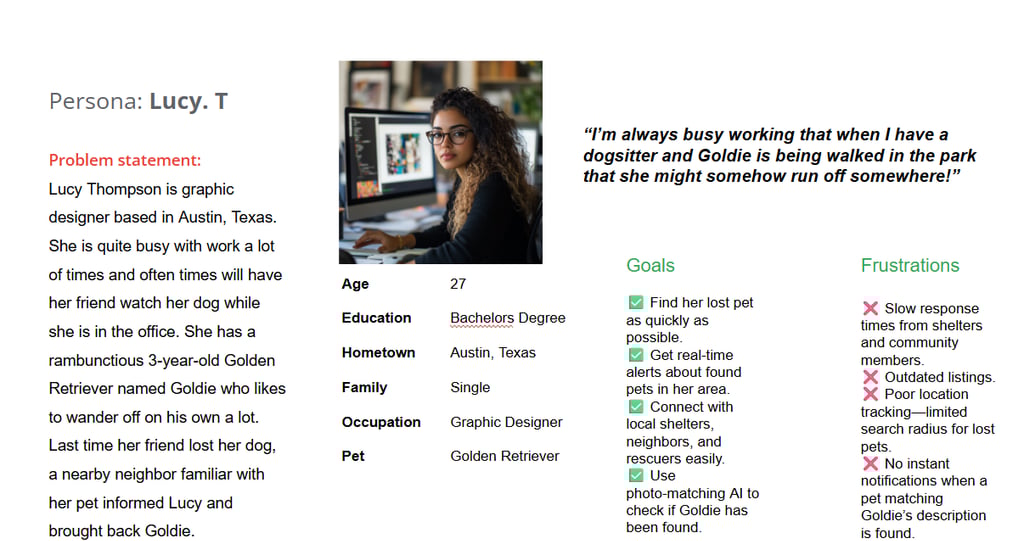
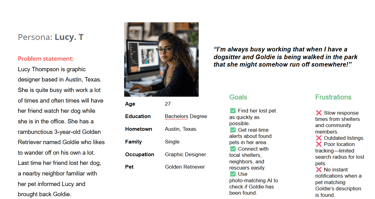
Based on my findings, I observed some trends among my participants. They expressed a desire to build a community through collaboration and empathy. A significant issue that a lot of pet owners found were trust and safety issues because of phony listings and potential privacy issues. Additionally, I found that those who have tried other pet find applications felt that some the data was inaccurate and lacked an active user base. This led me to develop a persona named Lucy Thompson.
Lucy is a graphic designer based in Texas. She is busy with work a lot of times and has either her friend or a dog-sitter come over and watch her dog. She is always concerned her young and energetic dog may wander off somewhere.
Lucy lives in pet-friendly apartment complex and often takes her dog Goldie for evening walks in the parks nearby after work. She is active in several online pet communities and occasionally volunteers at shelters. Because she works in social media she uses her own account to share pet adoption and lost and found pets on her posts. Sometimes when people reach out to her about their lost pets she feels that searching through other platforms across Facebook, Craigslist, and other websites feel chaotic and time-consuming. A lot of times false sightings and dupe listing make it hard to focus on relevant leads.
Ideate - Creating the Framework
Overview
Ideation
Storyboarding
Ideation
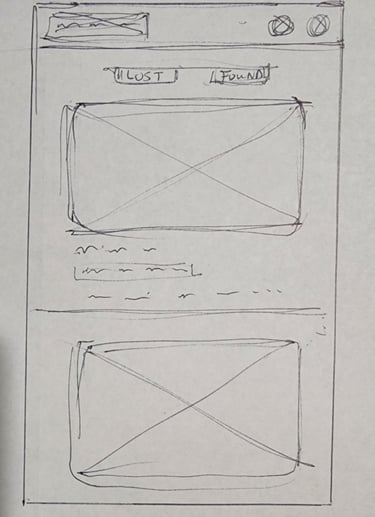
To build on my brainstorming, I began by first taking the ideas that were forming in my research phase. I did rough sketches with interval breaks in between each drawing.
User flow
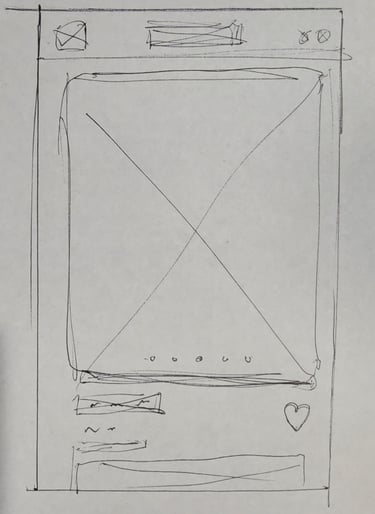
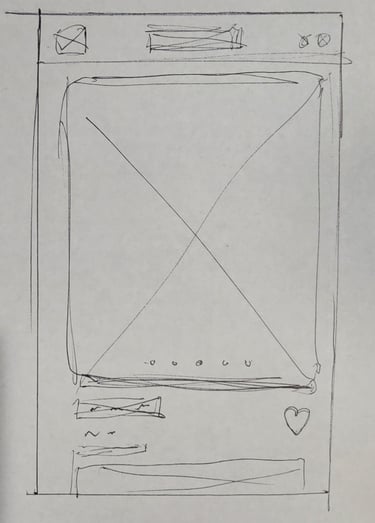
Storyboarding
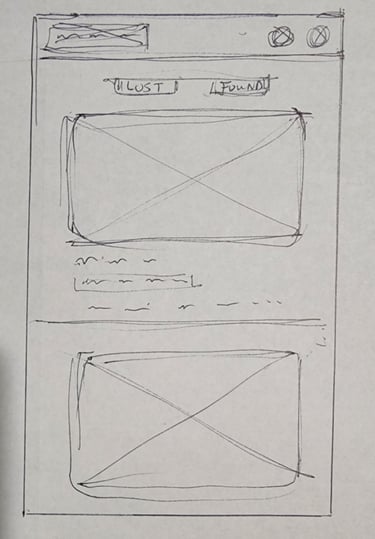
During my Storyboarding process, I continued to sketch drawings with design layout and functionality aspects into consideration.
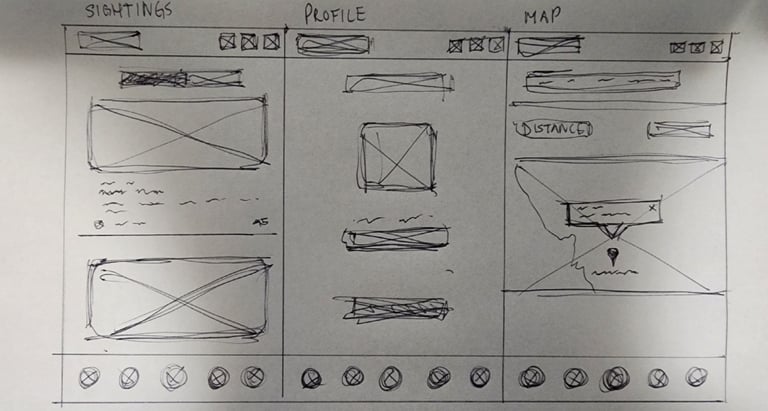
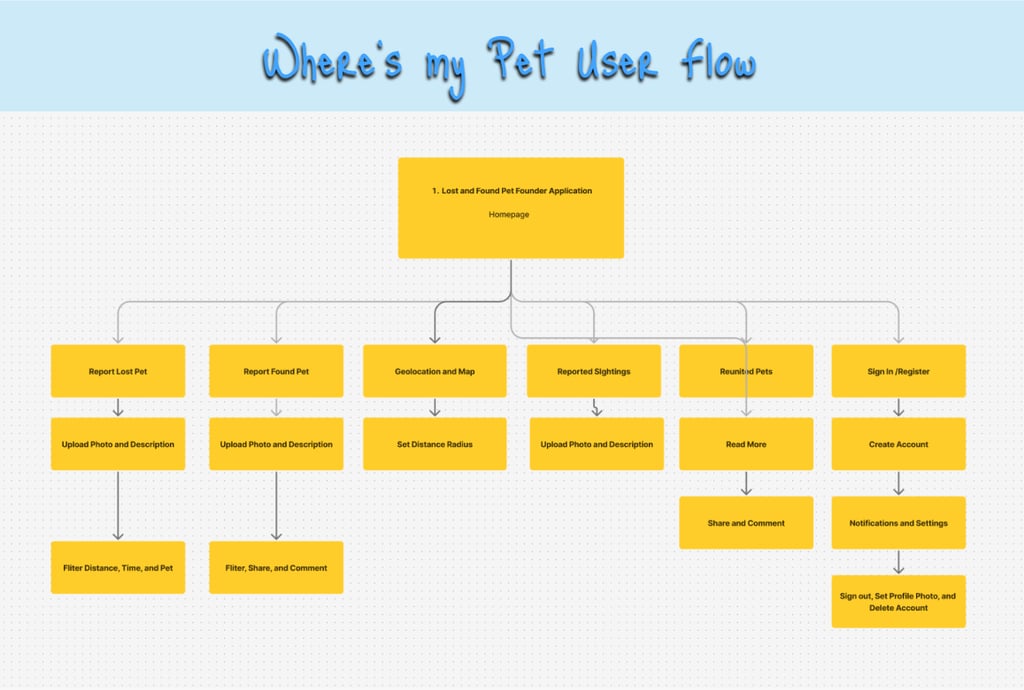
Userflow
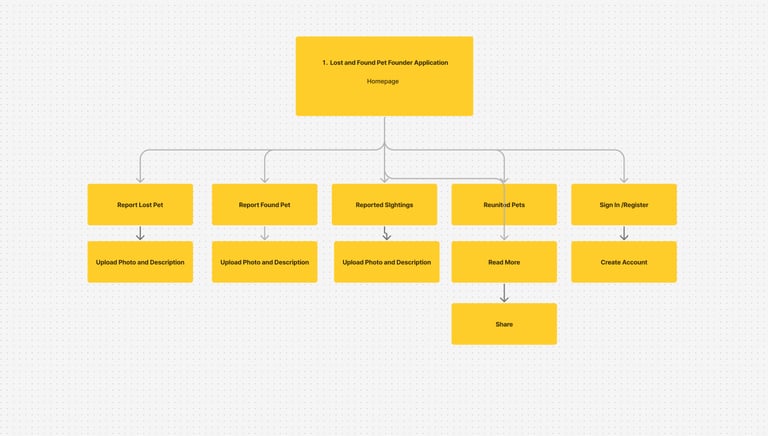
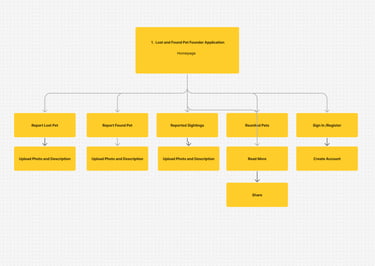
Prototyping - Creating the Design
Overview
Wireframes
Branding
UI Components
Final Design
Wireframes
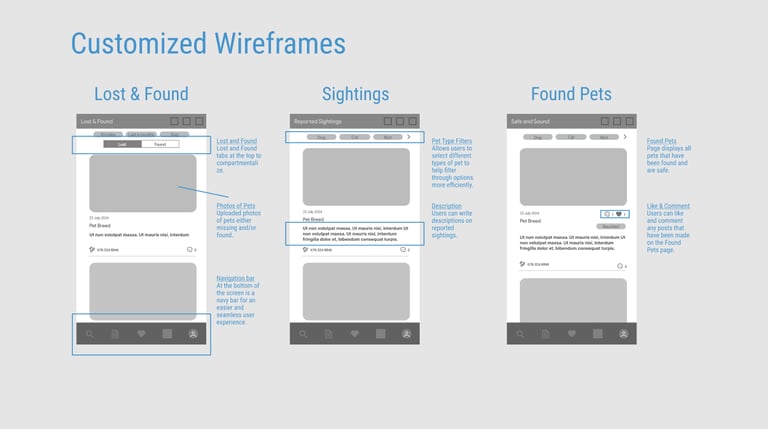
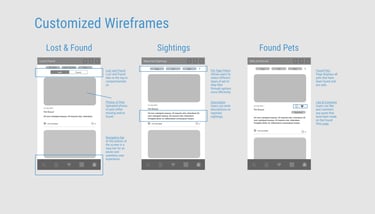
When I was creating my wireframes, I wanted to make sure users could easily navigate between Lost and Found tabs. I wanted to see if adding the social media aspect of interactions would make the application more approachable and relateable.
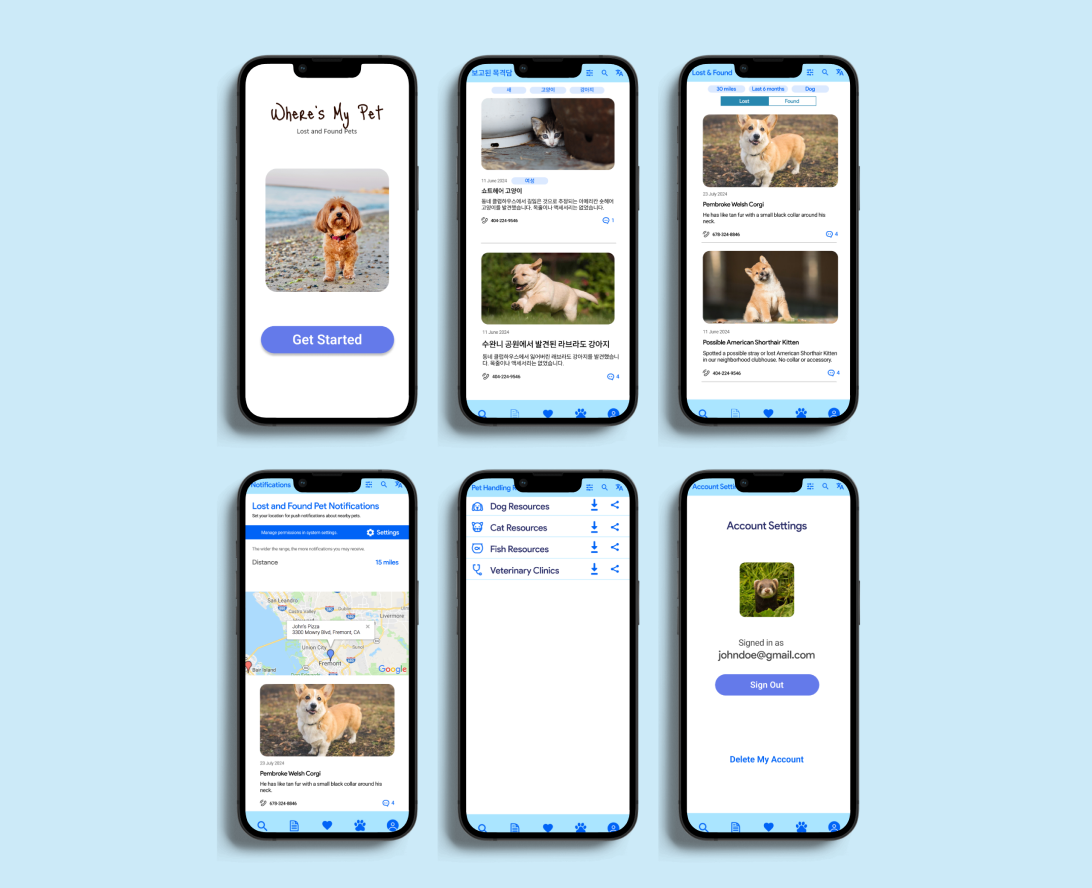
I began by building the Lost and Found tabs, Sightings, and Found Pets. Next, I made sure that there was an account or profile page where users could add information as well as a geo-location map.
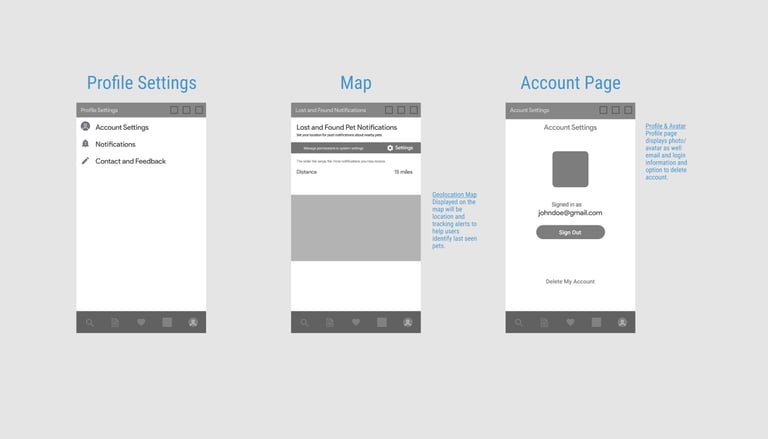
Low Fidelity Prototype Testing
I ran a test of the low-fidelity prototype with a group of participants. Many of the ideas I had developed during brainstorming didn’t come across as I had anticipated. Throughout the testing sessions, I encouraged the participants to share their expectations. After we went through the prototype, I presented a variety of ideas I had considered during its development, hoping to receive more helpful feedback.
I had a lot of ideas bouncing around in my head that I was eager to weave into my design. Trying out the low-fidelity prototype turned out to be incredibly helpful, enabling me to fine-tune my concepts and focus on the essential components.
Less is More -Several participants expressed that they appreciated the straightforward design of the layout, noting the absence of excessive images and text clutter on the homepage.
Navigation Bar - All participants felt that having the navigation bar at the top of the homepage made it easy and efficient to quickly search for specific artists they were interested in at the time.
Map & Location - One of the most popular feature which all participants unanimously agreed on was the map function. Having access to real-time location tracking and radius-based alerts helped nearby users in case a potential matching pet was found. Efficiency and timing is key when delivering lost pets.
Branding, Style, and Aesthetics
For this project, I wanted to design a brand and aesthetic that was both empathetic and relatable to pet owners. In order to do so, I implemented a monochromatic color scheme with shades of blue. Blue is universally known as a calming color. It communicates trust, sincerity, and security- feelings users need when they’re anxious.
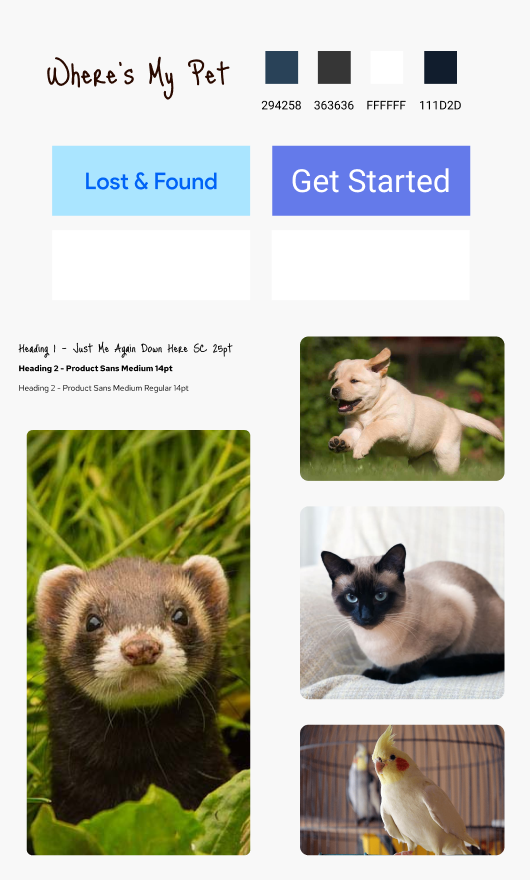
Final Design
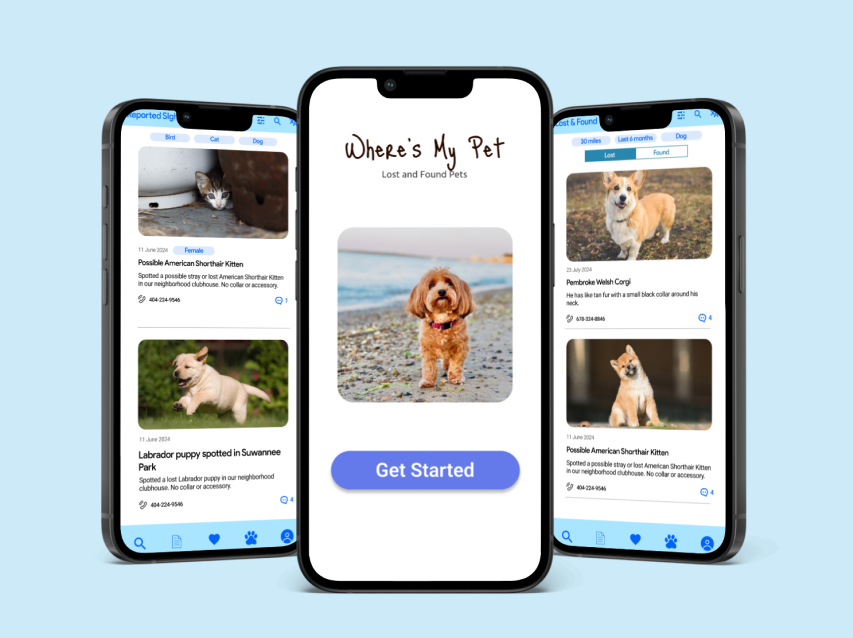
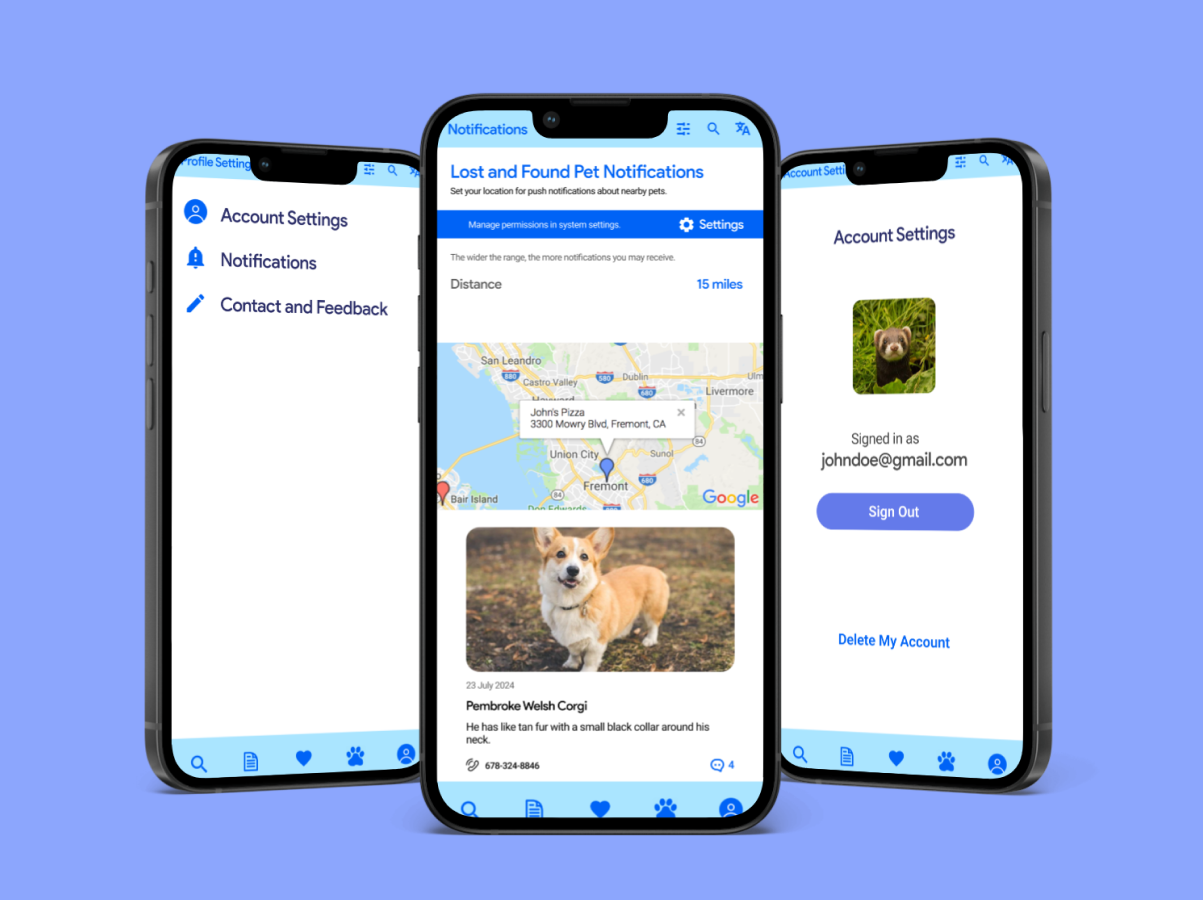
Geolocation Map
Language Translation
Geolocation Mapping
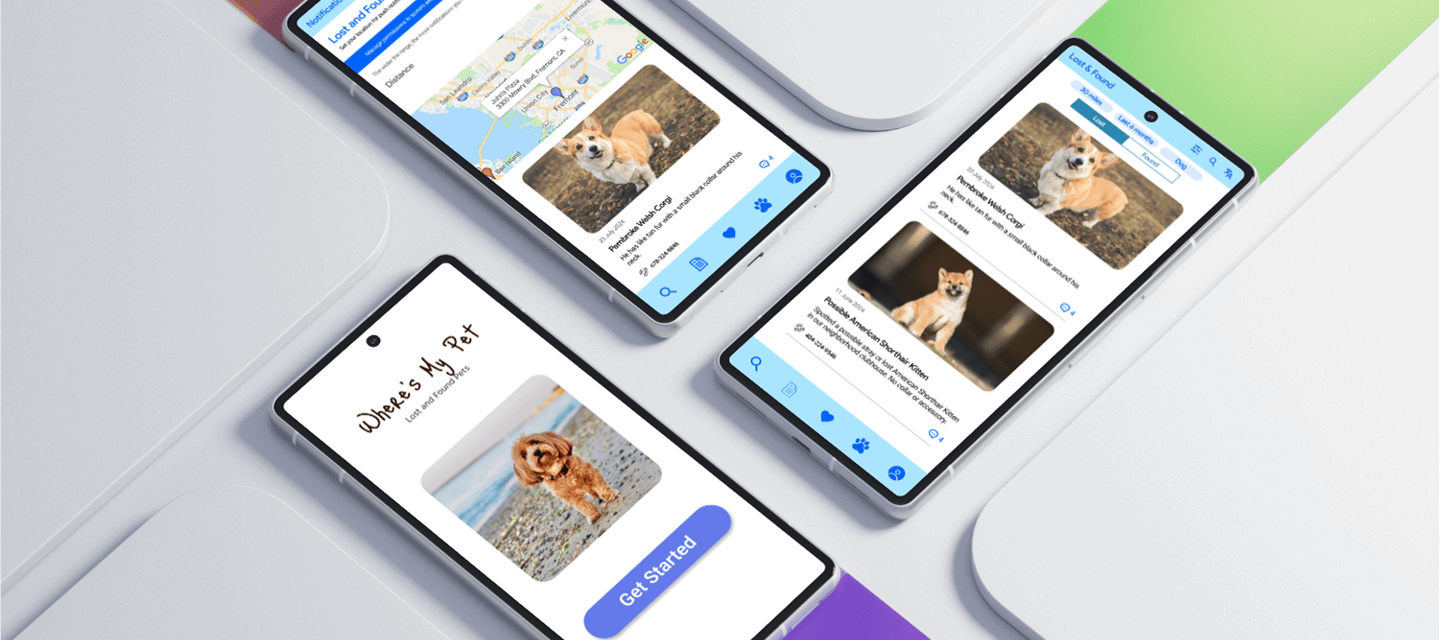
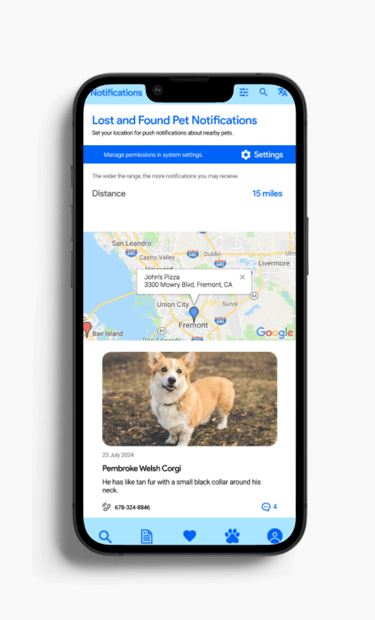
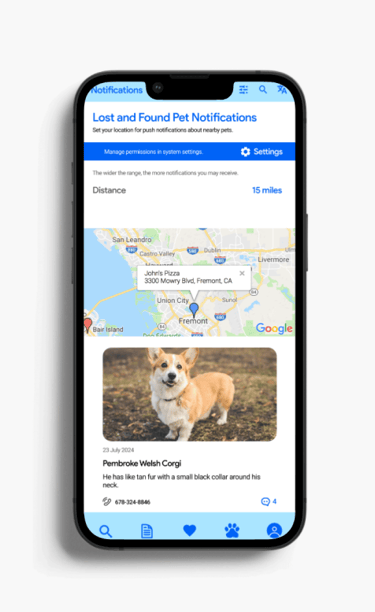
During the development of the application, my goal was to ensure it would be readily accessible to everyone, no matter where they are. When it comes to reports of lost pets, timing is crucial. The ability to utilize real-time location tracking and alerts allows users in the vicinity to view these updates quickly and efficiently.
Furthermore, I wanted users to be able to filter by distance and radius to help really hone in and focus on specific areas where they were last seen.
Inclusive Language Translation
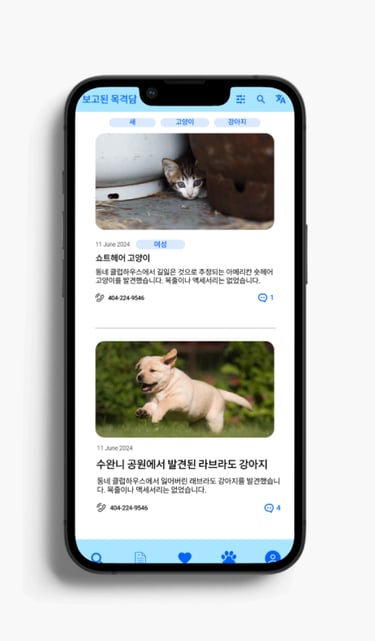
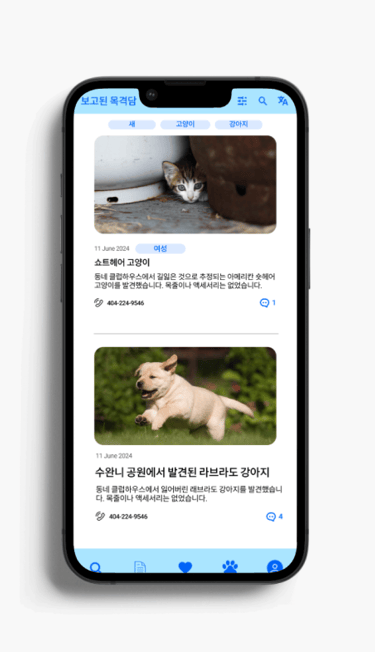
The purpose of having a language translation is to help all communities.
I wanted to empower users of all communities to come together and help one another regardless of language barrier. At the end of the day, regardless of language our pets are our family and that feeling is universal.
Being able to reduce frustrations and misunderstandings during critical interactions while encouraging participation from non-native speakers is key to building a large community.
High-Fidelity Prototype
Testing - Testing the Prototype
Overview
Usability Test Findings
Priority Revisions
Next Steps
Final Design
Usability Test Findings
I conducted usability testing with my high-fidelity prototype involving five participants. Out of these, one was new to the application and hadn’t previously engaged with the low-fidelity prototype. The objective for this test was to navigate and go through the process of searching for a lost pet. I’m pleased to report that all participants successfully completed the task.
Overall Experience - The participants said they enjoyed using the application and had no issues searching for lost and found pets.
Geolocation Map - All the participants mentioned that having the real-time locations and alerts reduced delay in critical moments when time-sensitive actions are needed.
Community Page and Announcements - One participant said she would’ve liked to see a community page where users can post upcoming pet events and other announcements for those in the community.
Found Pet Care Guide - Several participants said they thought there was a need for a users guide on how to safely and ethically handle found pets. Being able to comfort a scared animal and where to potentially contact local shelters or vet clinics were all important.
Revisions